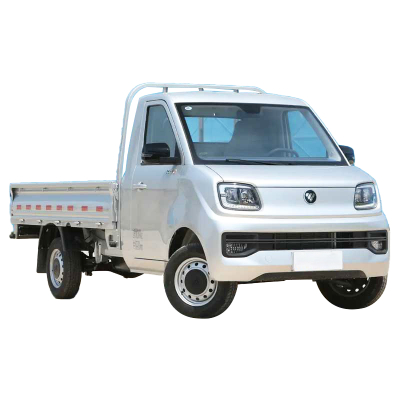
From "Going Global" to "Moving Up the Value Chain" – Chinese Commercial Vehicles Embark on a New Journey of Globalization
[Beijing, March 2026] – As Chinese-built trucks navigate through African mines, Southeast Asian construction sites, Middle Eastern desert highways, and even begin to roll onto European freight routes, a pivotal question has emerged: How can Chinese commercial vehicles transcend mere "going global" to truly "move up the value chain"?
The year 2026, marking the start of China's 15th Five-Year Plan, is becoming a critical juncture for the country's trucking industry to answer this question. Transitioning from scale expansion to value enhancement, from product export to ecosystem integration, and from conventional powertrains to new energy leadership, Chinese commercial vehicle manufacturers are embarking on a transformative journey—from "going global" to "moving up."
Market Evolution: From "Multi-Point Presence" to "Deep Localization"
Scale proves the ability to "go global," but depth of integration defines the capacity to "move up the value chain."
In 2025, China's heavy-duty truck exports reached 371,000 units, a 12.5% year-on-year increase. Industry forecasts for 2026 project continued steady growth, with export volumes expected to range between 350,000 and 400,000 units. More noteworthy is the shifting composition of this growth—exports to Africa surged by 60% year-on-year, while those to Southeast Asia grew by 47%. Markets along the Belt and Road Initiative are transitioning from "opportunistic trade" to "strategic cultivation."
This signifies that Chinese trucks are no longer mere "passersby" in overseas markets but are becoming indispensable participants in local economic development.
Paradigm Shift: From "Selling Products" to "Building Ecosystems"
True value chain ascendancy is not about selling vehicles abroad, but about building capabilities on the ground.
Sinotruk has established 37 KD (Knock-Down) assembly plants and over 700 service outlets overseas, enabling "Made in China" to take root locally.
FAW Jiefang is advancing its "Four Transformations" strategy, shifting from trade exports to full-value-chain localization encompassing R&D, manufacturing, and personnel.
Foton Motor has innovatively launched an integrated green energy ecosystem—"Vehicles + Charging Piles + Photovoltaics + Storage + Loads + Intelligence"—enhancing customer value through comprehensive lifecycle services.
These industry leaders' practices demonstrate that Chinese commercial vehicles are forging a new paradigm for going global: not unidirectional export, but bidirectional integration; not short-term sales, but long-term symbiosis.
Growth Drivers: From "Cost Performance" to "Technology + Brand"
The core indicator of "moving up the value chain" is the ability to secure a higher position within the global value chain.
In the new energy sector, Chinese companies are leveraging their comprehensive battery supply chains and cost-technological advantages into competitive moats. Early 2026 saw Foton's new energy vehicle exports surge by 87.8% year-on-year, with its premium pickup, the TUNLAND V9, winning international awards. The technological prowess of "Intelligent Manufacturing in China" is gaining global recognition.
The most symbolic breakthrough comes from the European market: Sinotruk has partnered with Austria's Steyr facility for contract manufacturing of diesel and electric trucks destined for Europe. This marks the first time a Chinese company has, as a technology exporter, gained entry into the world's most mature and demanding commercial vehicle market.
From "following" to "keeping pace," and in certain areas "leading," Chinese commercial vehicles are undergoing a profound value transformation.
Outlook: The Long-Term Challenge of "Moving Up the Value Chain"
Undoubtedly, "moving up" is not an overnight achievement. Geopolitical shifts, rising trade barriers, and the high thresholds of global standards all present challenges along the way.
How can companies break into developed markets like Europe and America while continuing to cultivate emerging markets? How can they facilitate the integration of Chinese standards with the global system while exporting products? The answers to these questions will determine whether Chinese commercial vehicles can successfully complete their metamorphosis from "internationalization" to becoming truly "global enterprises."
In 2026, with steady strides, innovative models, and enhanced technology, Chinese trucks are steadfastly advancing toward the goal of "global take root." From "going global" to "moving up the value chain," this is not only a necessary path for corporate development but also a defining chapter in Chinese manufacturing's value ascendancy on the global stage.