Rewriting the Rules? Hybrid Heavy Trucks Are Transforming from a "Transitional Solution" into a "Money-Making Machine"
While the new energy heavy truck market struggles to find a breakthrough in the narrow gap between the range anxiety of pure electric vehicles and the cost pressure of fuel vehicles, hybrid technology is tearing off the label of "transitional solution" with astonishing market performance, becoming a key force reshaping the industry landscape. The core driving force of this transformation is the triple value leap that hybrid heavy trucks bring to "bosses, operators, and drivers"—saving money, reducing worry, and saving effort.
Saving Money: Hitting the Core Pain Point, "Saving the Cost of a Truck" in Three Years
For any logistics company or individual trucker, the Total Cost of Ownership (TCO) is the ultimate benchmark for purchasing decisions, and hybrid heavy trucks are demonstrating overwhelming advantages on this core metric.
Extreme Fuel Efficiency, Immediate Cost Reduction. Fuel consumption accounts for a significant portion, as high as 34%, of heavy truck operating costs. The latest hybrid technologies achieve astonishing fuel savings through intelligent energy management. The Great Wall Hi4-G hybrid system achieved a fuel consumption as low as 19.9L per 100 kilometers in actual highway tests, with fuel consumption reduction exceeding 30% in cold chain transport in mountainous areas. The Auman Galaxy hybrid heavy truck achieves a 26% fuel saving rate in mountainous conditions and up to 16% on flat highways. Beijing Trucks iZhuimeng, with its intelligent ecological driving system, achieves an annual comprehensive fuel saving of 10%-20%, saving up to 60,000 yuan per year.
Over a longer timeline, this advantage accumulates into a huge figure. Analysis suggests that based on an annual operation of 200,000 kilometers, the fuel cost saved by a hybrid heavy truck in three years is enough to cover the price difference compared to a comparable fuel vehicle—equivalent to "saving the cost of a truck in three years." Even when benchmarked against imported high-end heavy trucks, the Great Wall truck delivered impressive results, saving 8.4 liters of fuel per 100 kilometers and achieving a comprehensive fuel saving rate of 19.8%.
Not Just Fuel Savings, But Cost Reduction Everywhere. The value of a hybrid heavy truck goes beyond fuel saving. Take the Beijing Trucks iZhuimeng as an example: its Smart EBI2.0 intelligent braking system prioritizes electric motor braking, significantly reducing brake pad wear and achieving an energy recovery rate of 80%. This means users not only save on the cost of replacing brake pads but also see a simultaneous reduction in urea consumption. Additionally, the factory-installed parking air conditioner eliminates the need and cost for retrofitting.
Technological Affordability, Breaking Down Price Barriers. In the past, a major reason hybrid technology was "praised but not purchased" was the high acquisition cost. Now, this barrier is being broken. In early 2026, Beijing Trucks clearly proposed a pricing strategy of "same price for same horsepower," firmly refusing to make users pay extra for new technology, truly realizing the concept of technology serving the people with practical benefits.
Reducing Worry: Full-Scenario Adaptability for More Efficient Operations
For fleet operators managing hundreds or thousands of vehicles, vehicle reliability, attendance rate, and management convenience are far more important than fuel consumption figures alone. Hybrid heavy trucks, with their powerful scenario adaptability and intelligent management tools, are making operations management unprecedentedly "worry-free."
One Truck for Multiple Uses, Scenarios Without Boundaries. Heavy truck transport scenarios are incredibly diverse, ranging from flat highways to mountainous slopes, from long-haul routes to urban distribution. Vehicles with a single power form often struggle to cover all bases. Hybrid heavy trucks, through intelligent switching between multiple operating modes, achieve "one truck for multiple uses." The Auman Galaxy next-generation hybrid heavy truck, based on the Super Hybrid 3.0 intelligent platform, can precisely cover 86 different operating conditions, including express delivery, general cargo, coal, and aggregate transport, allowing one truck to meet multi-scenario transport needs, significantly enhancing asset utilization.
Intelligent Management, Strategic Planning at Your Fingertips. Hybrid heavy trucks are not just means of transport; they are mobile intelligent terminals. Great Wall Trucks' self-developed "Cloud Network Tianxing Big Data Management Platform" allows fleet managers to monitor the status, energy consumption, and location of each vehicle in real-time, enabling efficient, digitized, and visualized dispatching. The "Super Hybrid Brain" HCU equipped on the Auman Galaxy, through 162 sensors and over 30 exclusive control strategies, makes optimal decisions within milliseconds, ensuring the vehicle always operates in its best state.
Superior Traffic Rights, Unobstructed Access. As countries impose increasingly strict environmental requirements, many cities restrict fuel trucks. Plug-in hybrid heavy trucks, capable of external charging, can enjoy the same "superior traffic rights" as pure electric commercial vehicles. This means fleets can flexibly arrange transport tasks 24/7, no longer constrained by restriction policies, naturally boosting operational efficiency.
Reliable and Durable, Worry-Free Attendance. In response to commercial vehicle users' extreme demands for reliability, the next generation of hybrid trucks embeds durability into their design from the outset. The Beijing Trucks iZhuimeng has undergone rigorous testing exceeding ten million kilometers, achieving an average failure interval of 60,000 kilometers. Its P2 hybrid architecture even incorporates technology that prevents gearbox clutch separation during shifting, fundamentally reducing component wear and achieving an extended lifespan of one million kilometers. Great Wall Trucks' hybrid system B10 life is further enhanced to 1.8 million kilometers, providing a solid guarantee for efficient operation.
Saving Effort: Elevating the Driving Experience, Making the Driver the "Commander"
For a long time, being a heavy truck driver has been a high-intensity profession, characterized by prolonged mental strain and physical fatigue. The proliferation of hybrid technology is fundamentally changing this status quo, transforming truck driving from a physically demanding task into a more relaxed and comfortable experience.
Powerful Performance, A Tiger with Wings. Benefiting from the instant response characteristics of the electric motor, hybrid heavy trucks possess starting and acceleration capabilities far surpassing their peers. The Great Wall Hi4-G system delivers a combined 1,050 horsepower, rivaling traditional 17L displacement engines. The Auman Galaxy 9, built on a 620-horsepower engine, allows the electric motor to intervene instantly when needed, making heavy climbing or highway overtaking effortless, significantly reducing driver stress in complex road conditions.
Intelligent Driving, Freeing Hands and Feet. The intelligent control of the hybrid system itself acts as an invisible "intelligent co-pilot." It can automatically select the most economical driving mode based on road conditions, switch to pure electric mode in congested areas to reduce the jolts and noise of engine start-stop, and automatically recover energy on downhill slopes, lightening the braking burden. Furthermore, passenger car-level L2 intelligent driving assistance features are beginning to trickle down to hybrid heavy trucks, such as adaptive cruise control, lane keeping assist, and automatic emergency braking, effectively reducing fatigue during long-distance driving.
Comfortable and Quiet, A Home on Wheels. The integration of the electric motor allows heavy trucks to bid farewell to the roaring noise and vibration of traditional diesel engines. The Auman Galaxy hybrid heavy truck, through customized acoustic and vibration control strategies, reduces noise by 20% and vibration by 30%, creating a quiet space for drivers comparable to a car. Coupled with the freedom of using the parking air conditioner powered by a large-capacity battery, drivers can enjoy comfortable temperatures while resting, without worrying about fuel consumption or high retrofitting costs. Zhou Hengping, a user research officer at Beijing Trucks, shared his deep insight: "In the past, driving a fuel truck meant daily anxiety staring at fuel prices. Now, that sense of solidity is something I never dared to imagine before."
Export Advantages: Chinese Hybrid Heavy Trucks Accelerate onto the Global Stage
While surging ahead in the domestic market, the overseas journey of Chinese hybrid heavy trucks has also begun, leveraging multiple core advantages to perform an "overtake on the bend" in the global commercial vehicle arena.
First-Mover Advantage in the New Energy Industry Chain, Seizing the Global Opportunity Window. The global commercial vehicle sector is currently in a critical transition window towards new energy. Although the European commercial vehicle market is generally declining, the trend towards electrification is accelerating—in the first three quarters of this year, the market share of electric commercial vehicles in Europe increased from 2.1% in the same period last year to 3.8%, with stringent carbon emission regulations acting as a driving force for market transformation. Chinese commercial vehicles, positioned at the forefront of the electrification transition and possessing a first-mover advantage in the intelligent electric industry chain, have ushered in a golden opportunity for globalization. A McKinsey survey shows that European customer acceptance of Chinese buses has reached 60%, and the leading edge of Chinese companies in the fields of electrification and intelligence is continuously fueling overseas market expansion.
Data Proves It: Exports Have Become a Core Pillar of High-Quality Development. Data from the China Association of Automobile Manufacturers (CAAM) shows that from January to September this year, China exported 748,000 commercial vehicles, a year-on-year increase of 10.2%, with exports accounting for nearly 24% of total commercial vehicle sales. Notably, exports of new energy commercial vehicles reached 64,000 units, a year-on-year increase of 1.5 times, demonstrating the growing competitiveness of Chinese commercial vehicles in overseas markets. Song Yang, General Manager of Sinotruk International Co., Ltd., stated frankly at an exhibition: "Overseas revenue has become a core pillar of our overall high-quality development," predicting that exports will exceed 150,000 units this year, with total revenue reaching 49 billion yuan.
Chinese Hybrid Heavy Trucks Set Sail Overseas on Multiple Fronts. Major commercial vehicle manufacturers are accelerating their overseas Layout (bùjú - strategic layout), proving the global value of the "China Solution" with tangible results:
Farizon Auto : Pioneering Entry into Southeast Asia. In October 2025, Farizon Auto's G9 range-extender mixer truck made its official debut at the Malaysia Truck Exhibition. This is the first Chinese range-extender heavy truck exported to the Southeast Asian region. Malaysia is actively promoting the green transformation of its automotive industry, creating a favorable market environment for new energy vehicles through policies like tax breaks and infrastructure development. Farizon Auto, with its methanol-hydrogen electric architecture, high-efficiency electric motor, and integrated chassis and body design, precisely meets local concrete transport needs, earning high praise from customers. Currently, Farizon Auto products are exported to over 60 countries and regions, including Eastern Europe, North Africa, Southeast Asia, and South America.
SANY: Entering the High-End Mining Market. SANY plans to deliver its first batch of 136-tonne SET150S hybrid mining trucks to Australia in the first half of 2026. Its strategy involves a mid-range entry approach, first proving total cost of ownership and availability with the 136-tonne model before expanding to larger tonnages. SANY advocates that its vertical integration capabilities can control truck delivery times within 4 to 6 months. In the mining market where "time to iron" is a core economic variable, shorter delivery times are an effective differentiating advantage. Currently, over 200 units of this platform are deployed in China and Central Asia, some with Cumulative (lěijì - accumulated) operating hours exceeding 15,000, indicating they have moved beyond the pilot stage.
Weichai New Energy Commercial Vehicle: Launch of Global Strategy Brand SDAC. In October 2025, Weichai New Energy Commercial Vehicle released its overseas strategy brand, SDAC, at its global cooperation conference. Leveraging the Weichai Group's industrial foundation covering over 150 countries and regions and nearly 3,000 service stations, it deploys hybrid, pure electric, hydrogen fuel cell, and other new energy commercial vehicle products. Addressing the complex environments of different global regions, Weichai is actively promoting localized Adaptive development (shìyìng xìng kāifā - adaptation development): strengthening thermal management systems for the extreme heat of the Middle East, upgrading anti-corrosion technology for the high humidity and high salinity of Southeast Asia and the Americas, and custom-developing high-cold models, low-temperature start capabilities, and Russian instrument panels for the CIS region.
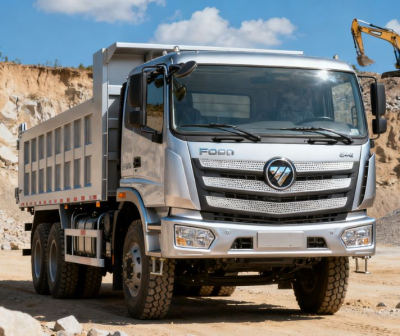
FOTON: New Energy Business Footprint Across the Globe. FOTON's exported new energy products now cover 45 countries and regions globally, with multiple models having obtained EU whole vehicle type approval. In Europe, FOTON pure electric trucks are already sold in countries like Germany, Italy, and Poland; in Latin America, over 1,400 FOTON pure electric buses have been delivered, aiding the rapid development of electric public transport in Chile; in the Asia-Pacific region, FOTON has become a leading brand for pure electric bus fleets in Malaysia. FOTON has established 22 localized KD plants worldwide, with an overseas sales network spanning 139 countries and regions.
Dongfeng Motor: Multiple Models Shine at Canton Fair. Dongfeng Import and Export Co., Ltd. showcased multiple medium and heavy-duty commercial vehicles, including the GX tractor and KC dump truck, at the 138th Canton Fair, precisely targeting the three major scenarios of logistics transport, engineering construction, and urban sanitation. The GX tractor, favored by Latin American and Middle Eastern buyers for its high fuel efficiency and comfortable driving experience; the KC dump truck, optimized for different climatic regions; and new energy models like the Forthing S7 Extended-range version (range-extender version) and T5 EVO hybrid also demonstrated the global strength of "Fengxing Zhizao" to the world.
From Product Export to Standard Export: The China Solution Goes Global. The Going to sea (chūhǎi - going overseas) of Chinese commercial vehicles is no longer simply about "selling products" but is advancing towards the export of "Chinese technology + Chinese standards." Major OEMs are actively establishing overseas companies, building global product platforms, and deploying localized sales, service networks, and manufacturing capabilities, moving from "competing on price" to "competing on value." Facing the complex international environment, Chinese commercial vehicle companies, leveraging their industry chain advantages, deep market insights, and flexible cooperation models, are contributing the "China Solution" to the global green upgrade of logistics transport.