Product Details
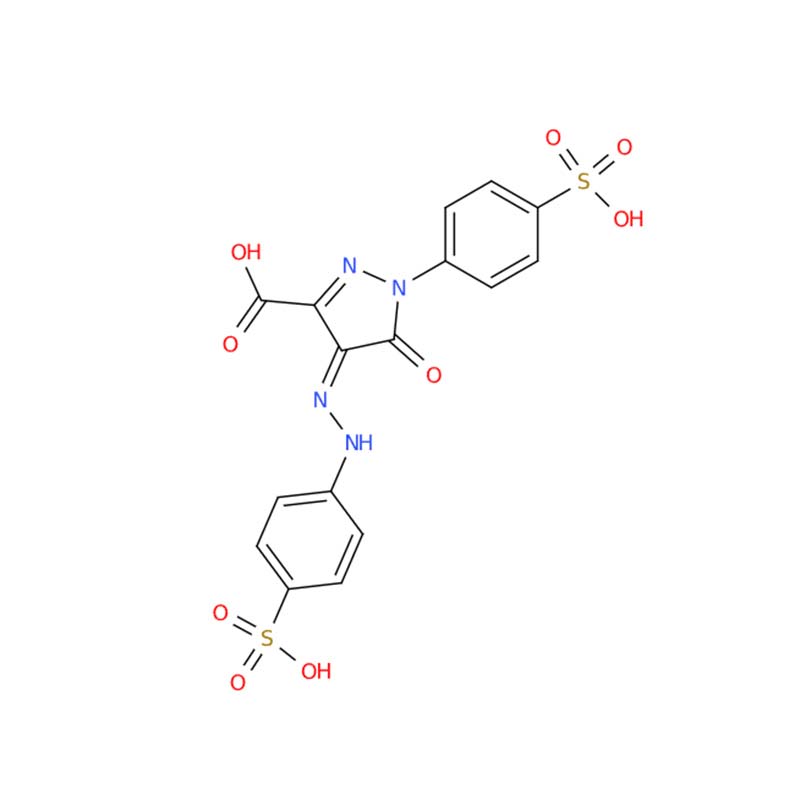
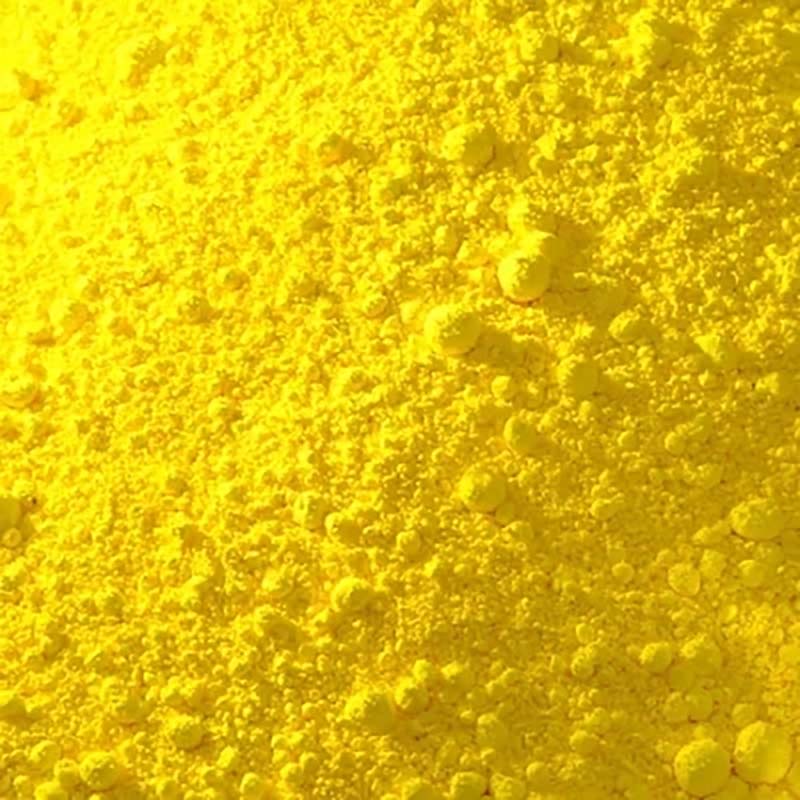
Tartrazine (Lemon Yellow), CAS 1934-21-0, is a synthetic azo dye that ranks among the three primary synthetic food colorants and is globally recognized as the most extensively utilized synthetic pigment in food applications. It is also widely known as FD&C Yellow 5 in the United States and bears the European food additive number E102. Under the Colour Index system, it is classified as CI 19140.
Its systematic chemical designation is trisodium 1-(4-sulfonatophenyl)-4-[(4-sulfonatophenyl)azo]-5-pyrazolon-3-carboxylate (molecular formula C₁₆H₉N₄Na₃O₉S₂, molecular weight 534.36 g/mol). The dye is readily soluble in water, giving a characteristic bright lemon-yellow solution, and offers excellent coloring performance with good stability. Tartrazine has a well-established safety profile and is permitted for use in foods, beverages, pharmaceuticals, and cosmetics, provided it is applied within authorized limits.
Tartrazine (CAS 1934-21-0) – Parameters & Safety Data
Table 1: Physicochemical Properties
| Property | Value |
|---|---|
| Melting point | 300 °C |
| Boiling point | 909.54 °C (at 101,325 Pa) |
| Density | 2.121 (at 20 °C) |
| Vapour pressure | 0 Pa (at 25 °C) |
| Storage temp. | Room temperature |
| Solubility | DMSO: sparingly soluble (heated); Water: slightly soluble (260 g/L at 30 °C) |
| Colour Index | CI 19140 |
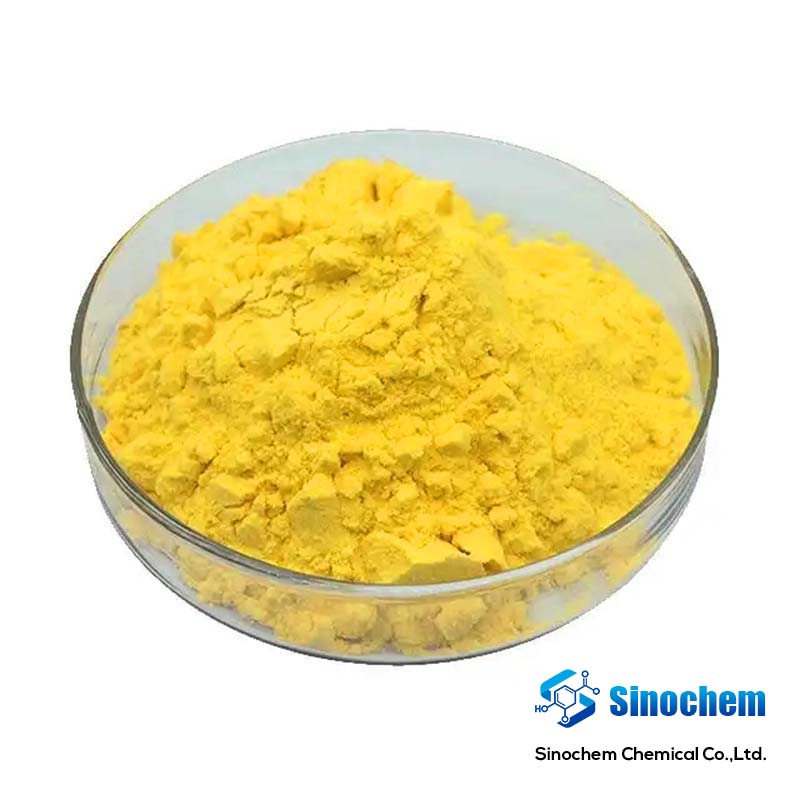
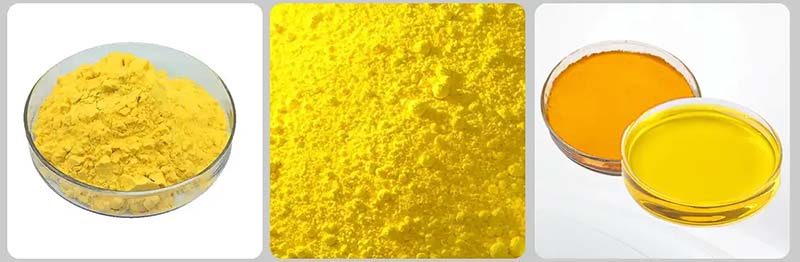
| Appearance | Orange powder |
| Hygroscopic | Yes |
| LogP | -1.572 (at 20 °C) |
| Merck | 14,9072 |
| BRN | 69850 |
| Stability | Stable; hygroscopic; incompatible with strong oxidising agents |
| Biological Applications | Investigational use in hepatitis, periodontal disease, psoriasis |
| EPA Substance Registry | Tartrazine (1934-21-0) |
Table 2: Safety Information
| Parameter | Value |
|---|---|
| Hazard codes | Xn |
| Risk statements | 42/43 |
| Safety statements | 22-36/37-45-24/25 |
| WGK Germany | 1 |
| RTECS | UQ6400000 |
| TSCA listed | Yes |
| HS Code | 32129000 |
| Acute toxicity (mouse, oral) | LD₅₀ = 12,750 mg/kg |

Tartrazine is the world’s most extensively used synthetic food colorant. It is widely incorporated into foods, beverages, pharmaceuticals, and cosmetics to provide a vivid and stable yellow hue. Beyond these primary sectors, its versatility extends to animal feed, tobacco products, and certain medical applications. In biomedical research, tartrazine has been investigated for potential therapeutic use in treating hepatitis, periodontal disease, and psoriasis.