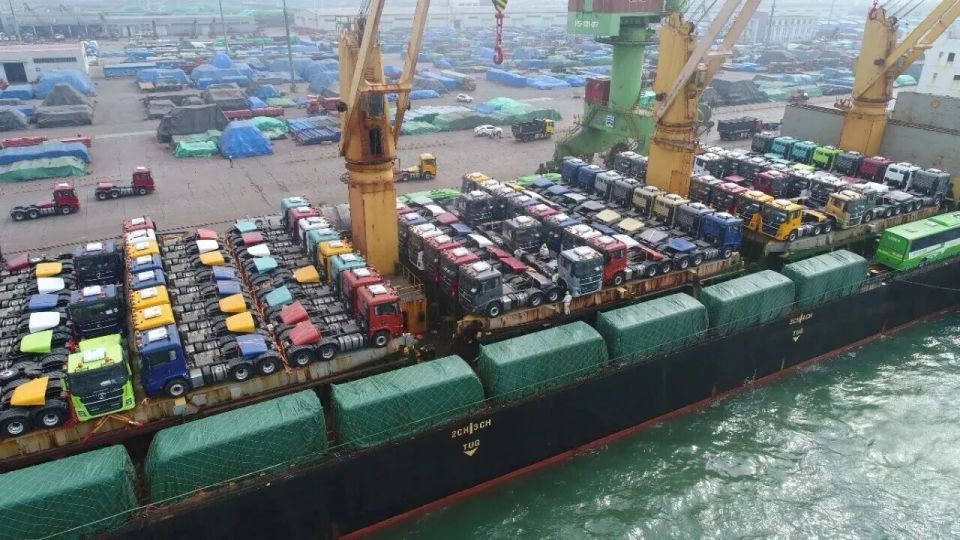
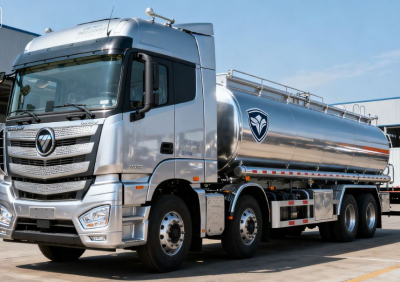
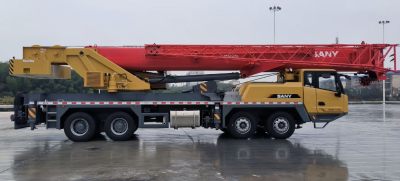
Faced with intensifying competition in the domestic market, overseas expansion has become a crucial growth driver for heavy-duty truck (HDT) manufacturers. Data shows that China exported 37,000 HDTs in October 2025, representing a year-on-year increase of 41.4%—a clear testament to the strong momentum of Chinese HDTs in the global market. An analysis of HDT manufacturers' overseas endeavors reveals several prominent characteristics of current HDT exports:

1. Strategic Shift: From Trade to Localized Operations
Currently, the overseas expansion model of Chinese HDT enterprises has gradually evolved from simple product trade to in-depth localized operations.
This transformation is driven by multiple factors. Many countries have imposed high tariffs on imported whole vehicles to protect their domestic industries, making localized production an inevitable choice to avoid tariffs and reduce costs. Meanwhile, responding to the Belt and Road Initiative and integrating into regional free trade agreements have also encouraged enterprises to establish local factories to leverage policy dividends and mitigate potential risks associated with overreliance on a single market.
Furthermore, road conditions, climatic environments, and usage habits vary significantly across regions. Localized operations enable enterprises to quickly respond to and accurately meet diverse market demands. More importantly, building comprehensive local service networks and spare parts centers (such as the overseas warehouse established in Germany by a leading manufacturer) effectively addresses customers' concerns regarding after-sales support and spare parts supply, thereby fostering brand trust and loyalty.
Notably, setting up assembly plants or wholly-owned factories overseas not only significantly shortens delivery cycles and enhances supply chain resilience but also creates substantial local employment opportunities and tax revenues. This wins support from local communities and governments, helping enterprises establish a responsible brand image.
A growing number of enterprises have achieved remarkable results through overseas manufacturing. For instance, the assembly plant of a major Chinese HDT manufacturer in Tarlac City, the Philippines, rolled out its first vehicle on September 5th. This plant not only realizes localized assembly of chassis but also produces truck bodies locally, shortening delivery times significantly.
Another leading manufacturer has operated a production facility in the Philippines for six years, achieving local assembly of products. Its nationwide sales and service network has created over 5,000 jobs in the country.
A prominent new energy commercial vehicle manufacturer has also enhanced its after-sales service capabilities by establishing a spare parts warehouse in Europe. Scheduled to be completed in the first quarter of 2026, the warehouse in Germany will cover European markets within 1-6 working days for regular orders, reducing the time for spare parts to reach regional distributors by 40-60 days.

2. Product Innovation: New Energy and Adaptive Improvements
After establishing the strategy of overseas manufacturing, enterprises must also adjust their product strategies.
Aligning with global carbon reduction goals, Chinese HDT manufacturers have made new energy technologies and adaptive improvements the core of their product strategies for overseas markets, aiming to break existing market barriers and build sustainable global competitiveness.
In the traditional diesel truck segment, established European giants have built profound technological barriers and brand advantages, putting Chinese brands at a disadvantage in direct competition.
However, increasingly stringent global carbon emission regulations and national electrification policies have created a new competitive landscape. By focusing on new energy technologies such as battery electric and extended-range electric powertrains, Chinese enterprises have successfully bypassed patent barriers in traditional powertrain systems, competing with global counterparts on a higher starting point. This has enabled them to shape a new brand image centered on green and intelligent mobility, shake off the "low-end" label, and enhance brand premium.

For example, in the Southeast Asian market, an extended-range concrete mixer truck based on an alcohol-hydrogen electric architecture was unveiled at a Malaysian truck exhibition. Equipped with a diesel extended-range system, the vehicle achieves a motor efficiency of over 97%. Additionally, HDTs are production tools, and their reliability and adaptability directly impact customers' operational efficiency. Given the significant differences in geographical environments, climatic conditions, and regulatory standards across global markets, in-depth customization for specific regions is a key measure to address product incompatibility.
Examples include optimizing heat dissipation systems for the high-temperature and high-humidity environments in Southeast Asia, enhancing air filtration systems for the sandy terrain in the Middle East, and adjusting headlight designs to comply with European safety regulations.
More importantly, this ability to provide tailor-made solutions reflects enterprises' respect for and insight into local markets, serving as the most effective way to build brand trust and customer loyalty.
3. Service System: Building End-to-End Value Chain Support
To gain a firm foothold in the international market, enterprises must go beyond mere product sales and establish a full-lifecycle service support system.
This not only improves the user experience by providing high-quality vehicle services but also enhances customer recognition of the brand.
For instance, the establishment of the European spare parts warehouse by the new energy commercial vehicle manufacturer aims to offer one-stop support for European distributors, including warehousing, logistics distribution, and after-sales services. This local spare parts warehouse also demonstrates the enterprise's long-term commitment to the European market.
Another leading Chinese HDT manufacturer has also made extensive efforts in overseas expansion. In August 2024, the company officially established its international automotive subsidiary, followed by the setup of 8 wholly-owned subsidiaries in countries such as Uzbekistan, Indonesia, and Mexico. Overseas KD (knocked-down) assembly plants and localized marketing and service networks are being rolled out simultaneously.
Currently, the manufacturer has established an overseas service network covering sales, spare parts, training, and finance. For example, it implemented a 48-hour repair guarantee in Vietnam. On-site research shows that this initiative has reduced the average repair cycle by more than 50%, significantly improving the operational reliability of fleets.
Clearly, this dual-driver model of product and service integration has become the core competitiveness of Chinese HDT enterprises, enabling them to continuously expand their global footprint.