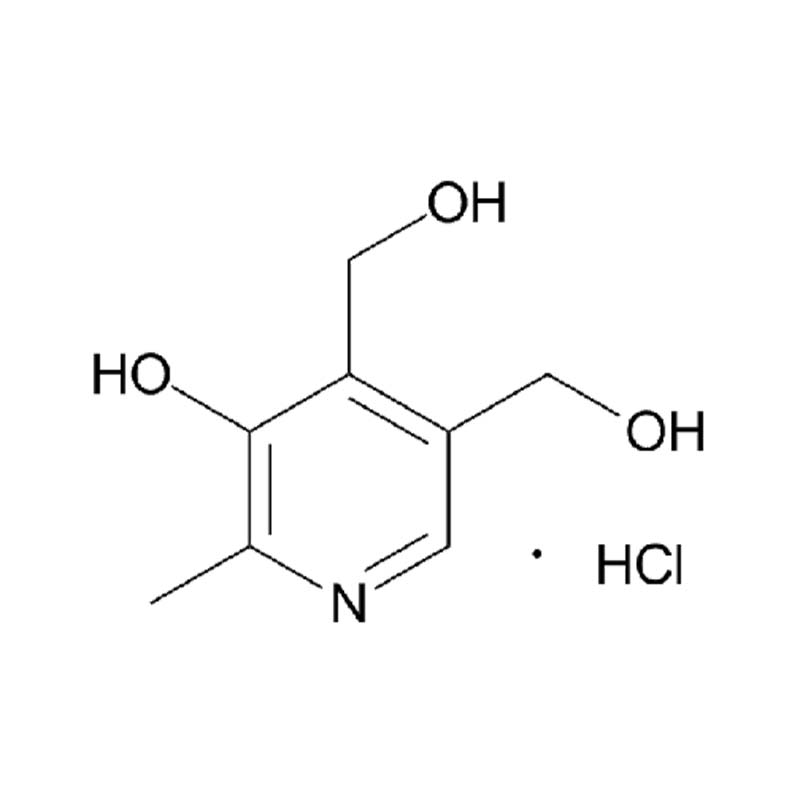
Pyridoxine hydrochlorideCAS:58-56-0
Prevention of Nutritional Deficiency and Adverse Symptoms:
Maintenance of Nervous System Function:
Physicochemical Properties and Application Characteristics:
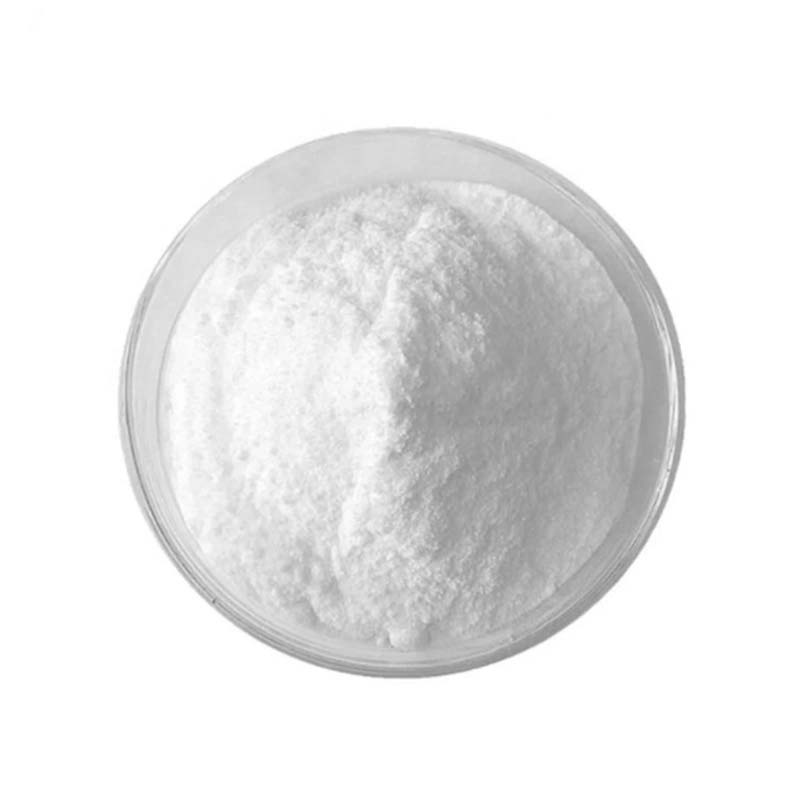
This substance appears as a white to pale yellow crystalline powder, with a decomposition temperature ranging from 204 to 206°C. It is highly soluble in water, ethanol and acetone, but only slightly soluble in diethyl ether. It has an acidic and bitter taste, remains stable under ordinary environmental conditions, yet will slowly degrade when exposed to light and possesses sublimation properties.
Melting point | 214-215 °C(lit.) |
density | 1.2784 (rough estimate) |
vapor density | 7.1 (vs air) |
refractive index | 1.5800 (estimate) |
Fp | 9℃ |
storage temp. | room temp |
solubility | H2O: 0.1 g/mL at 20 °C, clear, colorless |
form | Crystalline Powder |
color | White to almost white |
PH Range | 3.2 |
biological source | synthetic (organic) |
Water Solubility | 0.1 g/mL (20 ºC) |
Sensitive | Light Sensitive |
Merck | 147982 |
BRN | 3632435 |
BCS Class | 1 |
Stability: | Stable. Protect from air and light. |
LogP | -1.098 (est) |
CAS DataBase Reference | 58-56-0(CAS DataBase Reference) |
EPA Substance Registry System | 5-Hydroxy-6-methyl-3,4-pyridinedimethanol, hydrochloride (58-56-0) |
Safety Information | |
Hazard Codes | Xi,T,F |
Risk Statements | 36/37/38-39/23/24/25-23/24/25-11 |
Safety Statements | 26-37/39-45-36/37-16-7-24/25 |
RIDADR | UN1230 - class 3 - PG 2 - Methanol, solution |
WGK Germany | 2 |
RTECS | UV1350000 |
F | 45879 |
TSCA | Yes |
HS Code | 29362500 |
Hazardous Substances Data | 58-56-0(Hazardous Substances Data) |
Upon reaction with ferric chloride solution, this compound generates a distinct reddish-brown chromogenic reaction, which serves as one of its characteristic identification features.
Naturally occurring vitamin B6 can be isolated from multiple sources, including rice bran, plant materials, yeast, molasses and lipid-rich substances. At present, its industrial synthesis mainly employs methyl methoxyacetate, acetone and ethyl cyanoacetate as key starting materials.
In clinical practice, it is widely used for the prevention and treatment of pregnancy-related vomiting, radiation sickness-induced nausea, isoniazid poisoning, as well as gastrointestinal adverse reactions caused by antitumor drugs. In addition, it can be used as an adjuvant therapeutic agent for pellagra and certain other nutritional deficiency disorders.

When mixed with ferric chloride reagent, this compound yields a distinctive reddish‑brown color. Naturally, it can be found in rice bran, plant material, yeast extracts, molasses, and fatty substances. For synthetic production, starting materials such as methyl methoxyacetate, acetone, and ethyl cyanoacetate are employed.
In clinical practice, it is used to prevent and treat nausea during pregnancy, vomiting resulting from radiation therapy, isoniazid poisoning, and gastrointestinal side effects caused by anticancer drugs. Additionally, it serves as a supplementary treatment for pellagra and certain conditions arising from nutritional deficiencies.